
/ From idol to case file: the celebration turned into a brand
April 22, 2026Lukas Godoy
Paralegal
Alessandri
Who doesn’t remember Marcelo “Matador” Salas’ iconic celebration, dropping to one knee and pointing to the sky, or “Chupete” Suazo raising his index fingers to his mouth after scoring a goal? Those images are etched not only in the memories of fans, but also in the history of the sport. Because celebrations are not just a simple gesture; they are a signature, a form of identity, a snapshot that often turns out to be historic. Some of these celebrations arise from spontaneity and become rituals that players repeat time and again; however, these gestures, which once belonged to emotional memories, are beginning to enter another realm—one that is less romantic and more legal—specifically, trademark registrations for commercial exploitation.
This trend has been gaining momentum in Europe. Iconic and recognizable celebrations are becoming commercial assets and are gradually becoming more visible in the world of sports. In recent years, several soccer players have taken a step that would once have seemed unthinkable: bringing their goal celebrations from the field to the European Intellectual Property Office, turning them into trademarks associated with their image and career. What for decades was seen as a simple spontaneous expression has now become a personal identity understood as a distinctive sign, capable of generating recognition and revenue for the player. The celebrations shown below illustrate this phenomenon—gestures born in moments of euphoria, but which today form part of a broader strategy for the protection and exploitation of the personal brand in sports.
| Player | Celebration | Registration No. | Class | Application Date |
| Lamine Yamal | 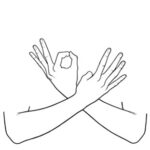 |
EUIPO
019112402 |
9, 18, 25, 28, 41 | 04/02/2025 |
| Kylian Mbappé |  |
EUIPO
017157355 |
9, 16, 18, 24, 25, 28 | 30/08/2017 |
| Dani Olmo | 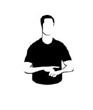 |
EUIPO
019103927 |
3, 14, 16, 18, 25, 28 | 11/11/2024 |
| Jude Bellingham |  |
EUIPO
018972644 |
25 | 10/01/2024 |
| Cole Palmer |  |
EUIPO
019120480 |
3, 5, 8, 9, 12, 14, 16, 20, 25, 28, 30, 32, 33, 35, 38, 41 | 19/09/2025 |
| Viktor Gyökeres |  |
EUIPO
019130684 |
3, 9, 14, 16, 18, 24, 25, 28, 41 | 12/09/2025 |
Why has it become fashionable to protect celebrations?
The interest in registering these celebrations stems from the ability to protect and monetize these unique expressions. A registered trademark grants its owner the exclusive right to use the celebration on commercial products and for economic exploitation. In this way, it becomes a highly valuable asset for soccer players’ personal brands—who already have their own trademarks—allowing them to expand and diversify their brand exposure beyond a simple name.
Imminent arrival at the INAPI registry
What is already beginning to take hold as a trend in Europe is unlikely to remain a foreign concept in Chile. In a sports landscape increasingly shaped by the logic of personal branding, it is not an exaggeration to think that this phenomenon will soon reach INAPI’s registries. As athletes, their representatives, and the agencies managing their image recognize the commercial value of a recognizable gesture, it also becomes more likely that these celebrations will begin to be presented not only as part of the spectacle but as signs eligible for protection. The question, then, is no longer whether this discussion will reach Chile, but when we will begin to see these celebrations—which, until recently, seemed to belong solely to popular memory—appear before the national trademark system.
In Chile, as part of intellectual property reform, Law 21,355 introduced amendments to Law 19,039, known in the industry as the “short law”. Now a trademark is “any sign capable of distinguishing products or services in the market,” so the only requirement for a sign to qualify as a trademark is that it be capable of distinguishing a product or service in the market, regardless of its ability to be represented graphically. Thus, following this reform, trademarks may consist not only of colors or sounds, but also of smells or three-dimensional shapes, with our legislation now also recognizing so-called non-traditional trademarks, such as soccer celebrations.


